
Special projects for critical missions.
Operational needs shape the technology. Acosta explores special-purpose unmanned systems and space connectivity initiatives for challenges that conventional products do not adequately address.
Special-purpose drones
Unmanned systems conceived for specific needs that conventional products do not adequately address.
The starting point is the operational requirement: the environment, access constraints and information needed to support the mission. Whether in confined spaces, hazardous atmospheres or long-endurance operations, the system is designed around the customer's need, not over a predefined platform. Each project is scoped jointly, so the solution fits precisely what the operation demands.
If your operation has a special requirement, it is worth a conversation.
Let's talk about your needs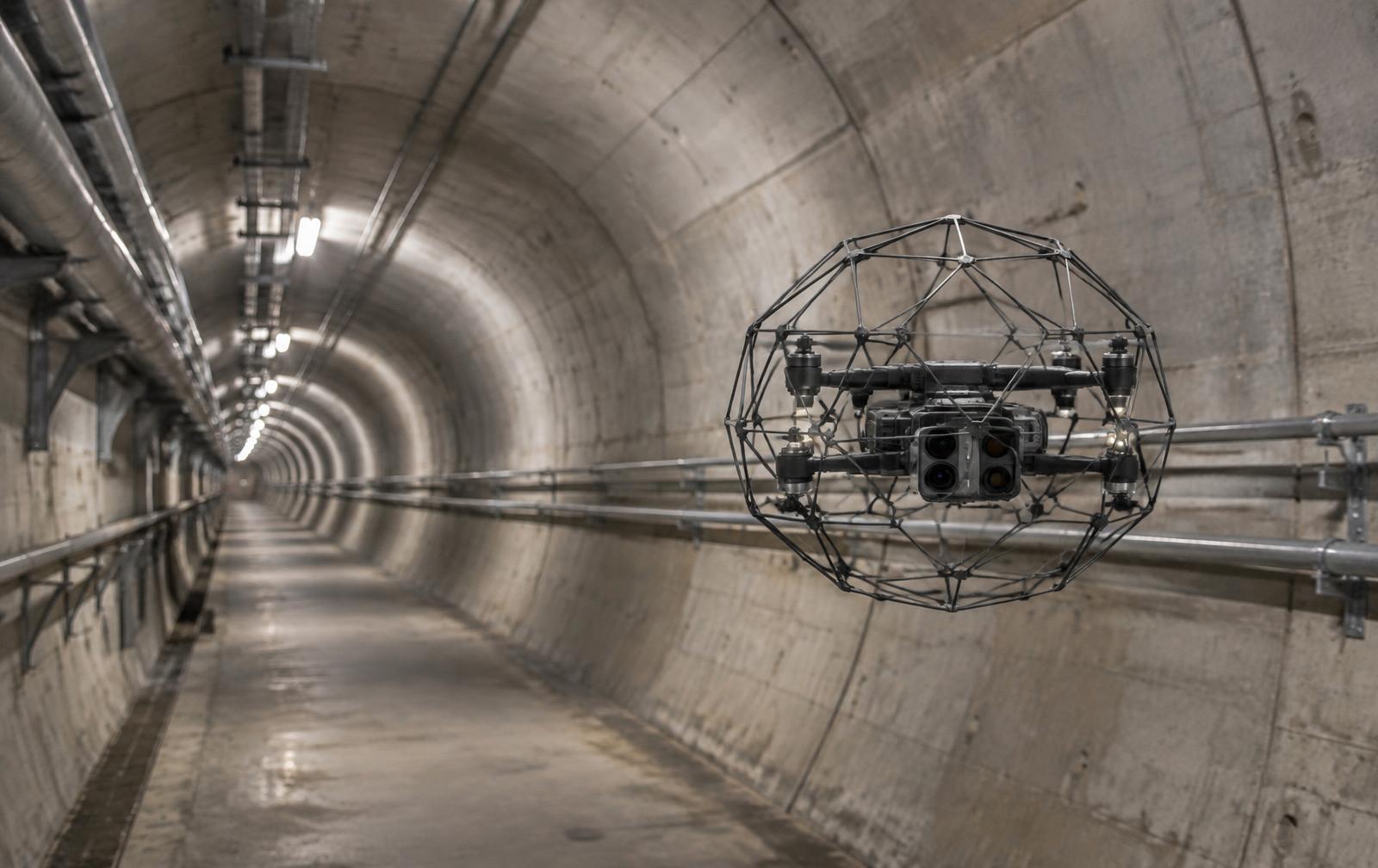
Satellite connectivity for remote areas
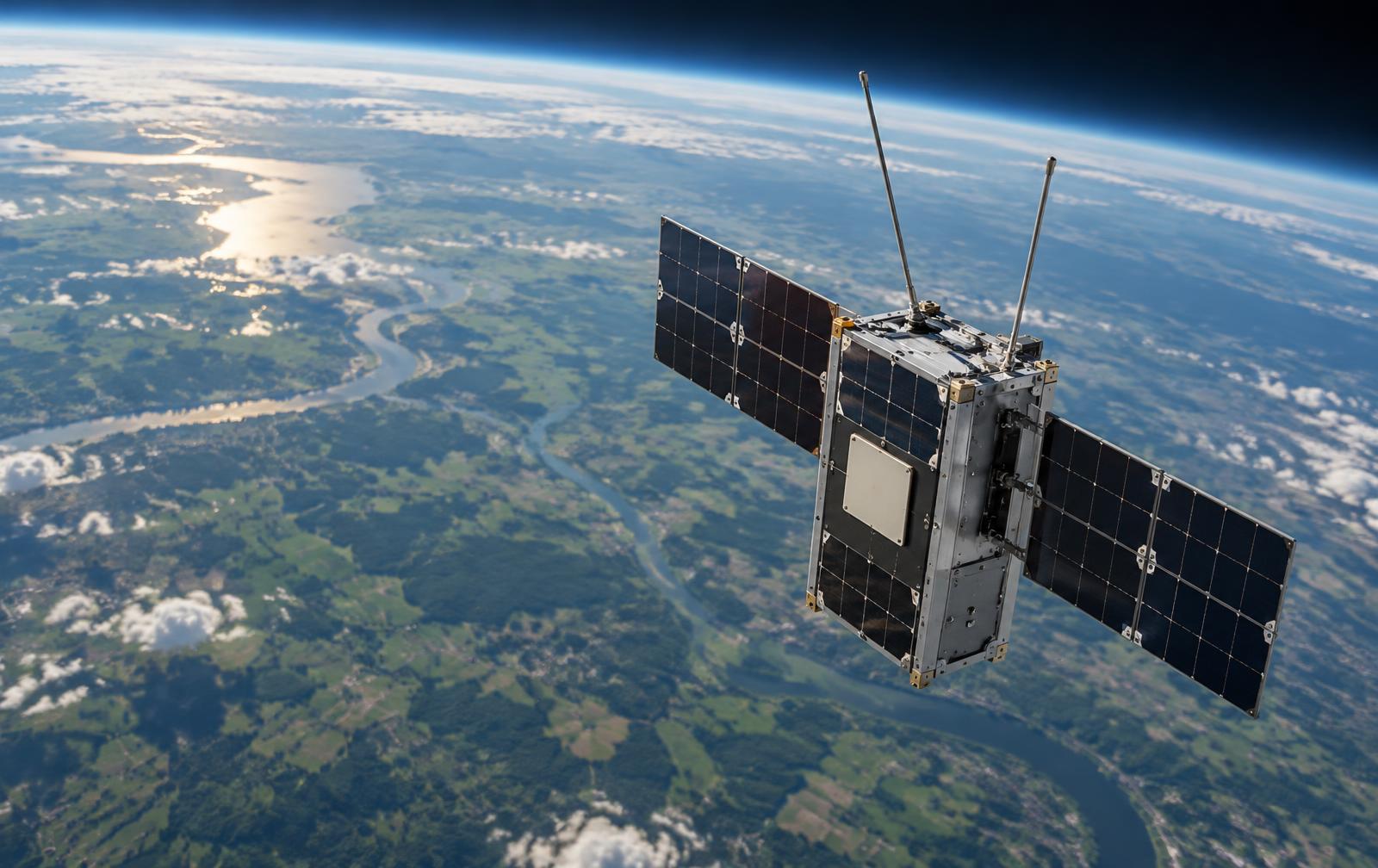
SARA is designed to relay data from sensors, equipment and monitoring stations in places with limited terrestrial coverage.
Potential uses range from tracking growing conditions on farms and collecting readings from remote energy and pipeline assets to supporting environmental monitoring and civil protection. Dispersed mine sites and offshore facilities face similar connectivity challenges.
The constellation is designed around CubeSat nanosatellites in low Earth orbit. Each satellite would receive data from remote field sensors, store it on board and forward it when it passes within range of a ground station.
From field trials to constellation design
Acosta started the project in 2021 to address a connectivity need it had identified in agriculture and environmental monitoring. The company invested its own resources, with support from FAPESP1 and CNPq.2 The team built and tested a ground-based sensor network as a proof of concept. That work laid the foundation for Mosaic.
Acosta also carried out mission design studies for SARA and simulated coverage across several orbital configurations. During the project, the company entered into agreements with Embrapa Instrumentação in São Carlos and the SENAI Institute for Innovation in Embedded Systems in Santa Catarina. Acosta also took part in Incubaero, an incubator affiliated with ITA and DCTA.
SARA remains in development. We welcome conversations with prospective investors and technology partners.
Discuss the SARA projectPublications
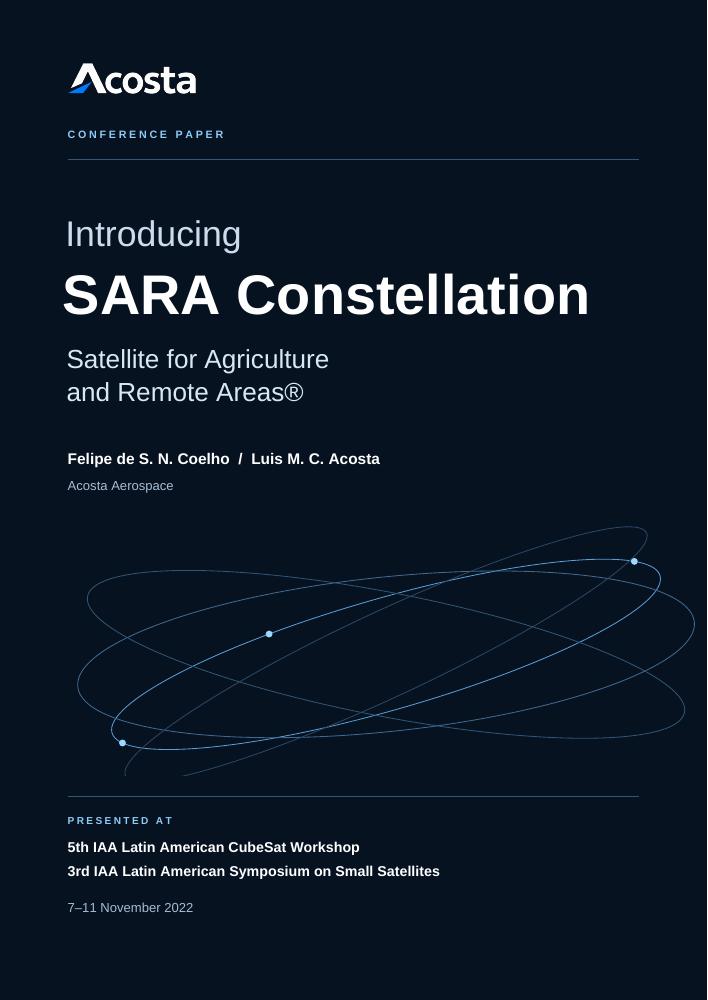
Introducing SARA Constellation: Satellite for Agriculture and Remote Areas describes the proposed mission and the orbital coverage simulations. Acosta presented the paper and discussed the findings with fellow researchers at the 5th IAA Latin American CubeSat Workshop and the 3rd IAA Latin American Symposium on Small Satellites in Brasília in 2022.
Download the paper (PDF)